




 General
10 Patient Engagement Strategies to Improve the Dental Patient Experience

Building strong relationships with patients is essential for running a successful dental practice. While providing quality dental care is important, the overall patient experience also depends on how effectively a practice communicates, follows up, educates, and supports patients throughout their care journey.
Many dental practices face challenges such as missed appointments, inconsistent follow-ups, low treatment acceptance, and patients who do not return for routine visits. These issues are not always related to the quality of clinical care. Sometimes, they result from communication gaps and a lack of consistent patient engagement.
Implementing effective dental patient engagement strategies can help practices address these challenges, strengthen patient relationships, and encourage long-term loyalty.
From personalized communication and automated reminders to patient education and feedback collection, there are several practical ways to make patients feel more connected to your practice.
In this guide, we explore 10 patient engagement strategies that dental practices can implement to improve the patient experience and build stronger relationships.
Why Is Patient Engagement Important for Dental Practices?
Patient engagement refers to the ongoing interaction between dental practices and patients before, during, and after appointments. It involves keeping patients informed, making communication convenient, encouraging preventive care, and helping them stay involved in decisions about their oral health.
Effective patient engagement can benefit dental practices in several ways:
- Improves patient retention: Consistent communication and follow-ups encourage patients to maintain their relationship with the practice.
- Reduces missed appointments: Timely reminders and convenient rescheduling options help patients stay on track with appointments.
- Encourages treatment acceptance: Clear explanations and ongoing communication help patients better understand recommended treatments.
- Builds patient trust: Responsive communication and personalized experiences make patients feel valued.
- Supports practice growth: Satisfied patients are more likely to return and recommend the practice to friends and family.
A well-planned engagement strategy helps dental teams move beyond appointment-based interactions and build lasting patient relationships.
10 Effective Patient Engagement Strategies for Dental Practices
1. Make Patient Communication Convenient and Consistent
Communication plays a central role in the patient experience. Patients may need to contact your practice to ask about appointments, confirm treatment details, request information, or clarify billing questions.
 Case Study
How Feeley Dental & Associates gained a full day back each week with Adit What happens when a dental office replaces outdated tools with one seamless platform? Feeley Dental & Associates turned to Adit to streamline forms, communication,...
Download Case StudyIf reaching your office is difficult or responses are delayed, patients may become frustrated.
Dental practices should make communication convenient by offering appropriate channels such as phone calls, text messages, and email. It is equally important to maintain consistent communication across these channels so patients receive clear and timely information.
Practical ways to improve patient communication:
- Offer multiple ways for patients to contact your office.
- Respond to patient inquiries within a reasonable timeframe.
- Use clear and easy-to-understand language.
- Keep patients informed about appointment changes.
- Establish consistent communication procedures for front-office staff.
Centralized patient communication platforms can also help teams manage patient conversations more efficiently. The goal is to make it easier for patients to connect with your practice without having to repeat their questions across multiple channels.
2. Simplify the Appointment Booking Experience
A complicated appointment booking process can discourage potential patients from completing a booking. Patients increasingly expect convenient digital experiences, including the ability to request or schedule appointments without making a phone call.
Dental practices can improve engagement by making appointment booking accessible through their websites and other appropriate digital channels.
Consider these improvements:
- Add a visible appointment booking option to your website.
- Make booking pages easy to navigate on mobile devices.
- Clearly display available appointment options where supported.
- Keep appointment instructions simple.
- Provide confirmation after a booking request or completed appointment booking.
A convenient booking experience reduces unnecessary steps for patients and makes it easier for them to take the next step toward receiving dental care.
3. Automate Appointment Reminders and Follow-Ups
Missed appointments can affect a dental practice's schedule, staff productivity, and ability to serve other patients. One way to address this challenge is through consistent automated appointment reminders and follow-up communication.
Patients have busy schedules and may occasionally forget upcoming visits. Sending timely reminders through text messages or email can help them remember appointments and plan accordingly.
Dental practices can also use follow-up messages after appointments to share relevant instructions or encourage patients to schedule recommended future visits.
Best practices include:
- Send appointment reminders at appropriate intervals.
- Provide clear appointment date and time information.
- Make it easy for patients to confirm or request a change.
- Follow up with patients who miss appointments.
- Send recall reminders when patients are due for routine visits.
Automation can reduce repetitive administrative work while helping practices maintain consistent communication.
However, automated messages should be configured carefully. Practices should follow applicable privacy requirements, obtain appropriate communication permissions, and avoid including unnecessary sensitive health information in messages.
4. Personalize Communication Based on Patient Needs
Patients do not all have the same needs, preferences, or communication habits. Sending identical messages to every patient may make communication feel generic and less relevant.
Personalized communication helps dental practices make interactions more meaningful.
For example, a new patient may need information about their first visit, while an existing patient may need a reminder about an upcoming appointment or a routine recall visit.
Ways to personalize patient communication:
- Address patients appropriately in messages.
- Send relevant appointment and recall reminders.
- Tailor educational information to patient needs.
- Respect individual communication preferences.
- Use patient history and practice-approved workflows to guide appropriate follow-ups.
Segmentation can also help dental teams organize communication based on relevant categories, such as new patients, existing patients, or patients due for a recall.
Personalization should always respect patient privacy and applicable consent requirements. Practices should only use information for communication purposes they are authorized to perform.
5. Educate Patients Beyond the Dental Chair
Patient education should not stop when an appointment ends. Many patients need additional information to understand preventive care, oral hygiene practices, and the importance of following their dentist's recommendations.
Dental practices can strengthen engagement by sharing useful educational resources through their websites, email communications, social media, and in-office materials.
Examples of useful educational topics include:
- Proper brushing and flossing techniques.
- The importance of routine dental checkups.
- Common causes of gum disease.
- Preventive dental care for children.
- Understanding common dental procedures.
- Maintaining oral hygiene between appointments.
Use simple language and practical explanations rather than complicated clinical terminology. Educational resources should complement the advice provided by dental professionals, not replace individualized clinical guidance.
When patients understand the importance of maintaining their oral health, they may feel more confident participating in their ongoing care.
6. Strengthen Patient Retention and Reactivation
Attracting new patients is important, but maintaining relationships with existing patients is equally valuable.
Some patients stop visiting a dental practice because they forget about routine checkups, relocate, become busy, or simply lose contact with the office.
A structured patient retention and reactivation strategy can help practices reconnect with these individuals.
Consider implementing these activities:
- Identify patients who are overdue for routine visits.
- Send appropriate recall reminders.
- Follow up with patients who have not returned after an appointment.
- Share educational information about preventive dental care.
- Make it convenient for patients to schedule their next visit.
Dental teams can also review patient communication and appointment records to identify opportunities for better follow-up processes.
The objective is not to send more messages indiscriminately. It is to maintain relevant, timely, and helpful communication that encourages patients to stay connected with their dental practice.
7. Collect and Act on Patient Feedback
Patient feedback provides valuable information about how people experience your dental practice.
Even when a practice delivers quality clinical care, patients may encounter challenges with appointment scheduling, waiting times, communication, or administrative processes.
Regular feedback collection helps dental teams understand these experiences and identify areas that need improvement.
Ways to collect patient feedback include:
- Send post-appointment satisfaction surveys.
- Ask patients about their booking experience.
- Provide convenient ways to share suggestions.
- Monitor recurring complaints and concerns.
- Review feedback during team meetings.
For example, if multiple patients mention difficulty reaching the front desk, the practice can review its call-handling procedures and explore ways to improve response times.
Feedback is most valuable when practices take action based on what they learn.
Dental offices should also follow appropriate privacy and review-management practices when collecting and responding to patient feedback.
8. Use AI to Improve Front-Office Patient Engagement
Artificial intelligence is creating new opportunities for dental practices to improve front-office communication and reduce repetitive administrative work.
Dental teams often manage several responsibilities simultaneously, including answering calls, responding to inquiries, handling appointment requests, and coordinating follow-ups.
AI-powered front-office tools can support these activities by helping practices manage routine interactions more efficiently.
Examples include:
- AI-powered phone agents that assist with incoming patient calls.
- Website chat tools that help visitors find information.
- Automated responses to common questions.
- Communication workflows that support appointment-related interactions.
- Tools that help staff manage routine front-office tasks.
However, AI should support the dental team rather than replace professional judgment or appropriate human assistance.
Practices should also evaluate how AI tools handle patient information, what data they collect, and whether their privacy and security practices meet applicable requirements.
When implemented thoughtfully, AI-powered patient engagement tools can help dental practices provide more responsive communication while allowing staff to focus on interactions that require personal attention.
9. Build Trust Through Social Media and Community Engagement
Social media gives dental practices an opportunity to connect with their local communities beyond the dental office.
Platforms such as Facebook and Instagram can help practices share educational information, communicate updates, and build awareness about preventive dental care.
Instead of focusing entirely on promotional messages, practices should prioritize useful and relevant content.
Content ideas for dental practices include:
- Oral hygiene tips and educational posts.
- Answers to frequently asked dental questions.
- Introductions to dental team members.
- Practice updates and community announcements.
- General information about preventive dental care.
- Educational videos explaining common dental procedures.
Community engagement can also include participating in local health events, organizing oral health education sessions, or supporting school-based awareness programs.
When creating social media content, avoid sharing identifiable patient information or photographs without appropriate authorization. Educational content should also be reviewed for clinical accuracy.
Consistent and responsible community engagement can help dental practices build familiarity and trust with prospective and existing patients.
10. Measure Patient Engagement and Improve Your Strategy
Patient engagement should be treated as an ongoing improvement process rather than a one-time initiative.
Dental practices need to understand whether their engagement activities are helping patients stay connected, attend appointments, and maintain relationships with the practice.
Tracking relevant performance indicators can help identify what is working and where improvements are needed.
Some useful patient engagement indicators include:
| Metric | What it helps measure |
|---|---|
| Appointment attendance rate | How consistently patients attend scheduled appointments |
| Appointment cancellation rate | How frequently scheduled appointments are cancelled |
| Patient retention rate | How well the practice maintains existing patient relationships |
| Recall appointment rate | How effectively the practice encourages routine return visits |
| New patient conversion | How effectively inquiries become new patient appointments |
| Patient feedback scores | How patients perceive their overall experience |
| Communication response time | How quickly the practice responds to patient inquiries |
For example, if appointment attendance declines, the practice can review its reminder processes and identify whether patients are receiving timely communication.
Similarly, if patient retention is lower than expected, the team can evaluate recall workflows and follow-up procedures.
Use reporting tools and available practice data to monitor trends over time. The specific metrics available will depend on the practice's software, integrations, and reporting configuration.
Common Patient Engagement Challenges in Dental Practices
Even practices with experienced teams can struggle to maintain consistent patient engagement. Some common challenges include:
- Missed communication: High call volumes and limited front-office resources can make it difficult to respond to every inquiry promptly.
- Inconsistent follow-ups: Without structured workflows, patients may not receive timely reminders or recall messages.
- Limited digital convenience: Complicated booking processes and a lack of convenient communication options can create friction for patients.
- Generic communication: Sending the same messages to everyone may reduce relevance and patient interest.
- Lack of performance visibility: Without reviewing engagement data, practices may struggle to identify communication gaps and retention opportunities.
Addressing these challenges requires a combination of well-defined processes, trained staff, and appropriate technology.
How Patient Engagement Software Helps Dental Practices
Managing patient interactions across phone calls, text messages, emails, scheduling tools, and follow-up processes can become difficult as a practice grows.
Dental patient engagement software helps bring important communication and engagement activities into more organized workflows.
Depending on the platform and its integrations, these solutions may support:
- Two-way patient messaging.
- Appointment reminders and follow-ups.
- Online appointment scheduling.
- Patient communication campaigns.
- AI-assisted front-office interactions.
- Patient feedback collection.
Communication and practice performance reporting.
When evaluating software, dental practices should consider ease of use, integration with their existing practice management system, available automation features, reporting capabilities, and data security.
The right solution should complement the practice's existing systems and help the team deliver a more consistent patient experience.
How Adit Helps Dental Practices Improve Patient Engagement
Adit is an AI-powered patient communication and engagement platform designed to help dental practices manage important front-office interactions.
Rather than replacing an existing practice management system, Adit integrates with supported PMS/EHR platforms and helps dental teams centralize patient communication and engagement workflows.
Its capabilities can support several areas of the patient experience:
- Adit Voice: Helps dental teams manage patient phone communication through a cloud-based VoIP phone system.
- Two-Way Messaging: Supports communication between dental practices and patients through messaging workflows.
- AI Front Desk: Helps support front-office interactions and routine patient inquiries.
- AI Web Chat: Gives website visitors another way to interact with a dental practice and seek information.
- Online Scheduling and Reminders: Supports appointment-related workflows that help make booking and follow-up communication more convenient.
- Adit Analytics: Provides available practice and performance insights to help teams review relevant operational and patient engagement trends.
By bringing these capabilities together, Adit helps dental practices improve communication, organize front-office workflows, and create more connected patient experiences.
Explore Adit's patient communication and engagement platform to learn more.
Conclusion
Effective patient engagement requires more than sending appointment reminders or responding to phone calls. It involves creating consistent, convenient, and meaningful interactions throughout the patient relationship.
By improving communication, simplifying appointment booking, personalizing follow-ups, educating patients, and collecting feedback, dental practices can create a better patient experience and strengthen long-term relationships.
The right technology can make these activities easier to manage, but successful engagement ultimately depends on understanding patient needs and building processes that support them.
Start with a few practical improvements, measure their impact, and continue refining your approach to create a more connected dental patient experience.
Frequently Asked Questions About Dental Patient Engagement
1. What is patient engagement in dentistry?
Patient engagement in dentistry refers to the ongoing communication and interactions between dental practices and patients. It includes appointment reminders, follow-ups, patient education, feedback collection, and other activities that encourage patients to stay involved in their oral healthcare.
2. Why is patient engagement important for dental practices?
Patient engagement helps dental practices build trust, improve communication, encourage routine visits, and strengthen patient retention. Consistent engagement can also help reduce missed appointments and create a more convenient patient experience.
3. How can dental practices improve patient engagement?
Dental practices can improve patient engagement by offering convenient communication channels, simplifying appointment booking, automating reminders, personalizing follow-ups, sharing educational resources, collecting feedback, and monitoring engagement performance.
4. How can dental practices improve patient retention?
Practices can improve patient retention by maintaining consistent communication, sending recall reminders, following up with overdue patients, providing helpful oral health information, and making it convenient to schedule future appointments.
5. How can AI improve patient engagement in dentistry?
AI can support patient engagement by helping manage routine inquiries, assisting with incoming calls, providing website chat interactions, and supporting front-office communication workflows. Its role should be clearly defined, with appropriate privacy safeguards and human assistance available when needed.
more about Adit?
Say goodbye to the hassle of using multiple tools. Adit centralizes your calls, texts, payments, reviews, and scheduling into one powerful dashboard. Simplify your operations and boost patient satisfaction today.
Schedule a Demo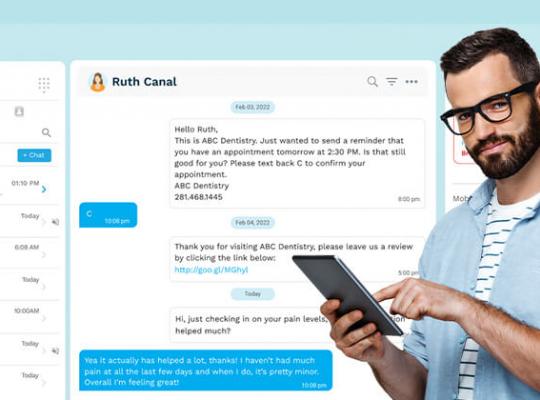



Josh has made a career working with large DSO organizations and leveraging his extensive sales experience to build partnerships with influential doctors and organizations within the dental industry. He travels the US as an expert guest speaker in medical seminars teaching doctors how to streamline their practices with the latest technology.

Get a $25 Gift Card when you take a demo
Schedule a Demo
Get a $50 Gift Card
when you take a demo

Every missed call costs you!
3 quick questions. One eye-opening estimate.
Your estimate
if your average is higher.
The production that you missed in this year
$29,000 – $42,000production back?

*Offer valid Nov 1–30, 2026. Your account executive sends the $50 Amazon gift card after your demo. The additional $150 applies when you sign up for an annual plan paid upfront. Terms apply.
Looks like you're out of bounds!
Hey there! Your current location falls outside Adit's area of operation. If this is unexpected, try disabling your VPN and refresh your page. For further assistance or to book a live demo, connect with us at 832-225-8865.
November 27 Amazon Demo Promo
Terms and Conditions
Last Updated: November 27, 2026Offer ends November 30, 2026, and is limited to prospective customers who sign an annual agreement before November 30, 2026. Gift card will be emailed to the company owner or established representative within 4 weeks of signing the annual agreement. Offer may not be combined with any other offers and is limited to one (1) gift card per office. Offer is not available to current customers or to prospective customers or individuals that have participated in a Adit demo during the prior six (6) months. Recipient is responsible for all taxes and fees associated with receipt and/or use of the gift card as well as reporting the receipt of the gift card as required under applicable federal and state laws. Adit is not responsible for and will not replace the gift card if it is lost or damaged, is not used within any applicable timeframe, or is misused by the recipient. Adit is not responsible for any injury or damage to persons or property which may be caused, directly or indirectly, in whole or in part, from the recipient’s participation in the promotion or receipt or use of the gift card. Recipient agrees to indemnify, defend and hold harmless Adit from and against any and all claims, expenses, and liabilities (including reasonable attorney’s fees) arising out of or relating to a recipient’s participation in the promotion and/or recipient’s acceptance, use or misuse of the gift card. This offer is sponsored by Adit Communications, Inc. and is in no way sponsored, endorsed or administered by, or associated with Amazon.

Thank You!
We appreciate your interest! Adit AI will be calling you in the next few minutes!


Why Adit?
Cut your software bill by up to 60% when you merge everything your dental office needs to run under one roof.

Centralize Communications
- Phones & TeleMed
- Emails & eFax
- Texting & Reminders
- Call Tracking and more!

Streamline Operations
- Patient Forms
- Online Scheduling
- Payments
- Reviews and more!

Boost Production
- Performance Dashboards
- Morning Huddle
- Claims & Collections
- Patient Profiles
- Follow Up Lists
- Year Over Year Metrics

Acquire More Patients
- Digital Marketing
- Website Design
- SEO
- Google Ads
- Facebook Ads
 Front Desk free for life when you sign up!
+ $50 Amazon Gift Card
Sign up by filling out the form