



From Patient Care to Patient Experience: How Dentistry Is Changing
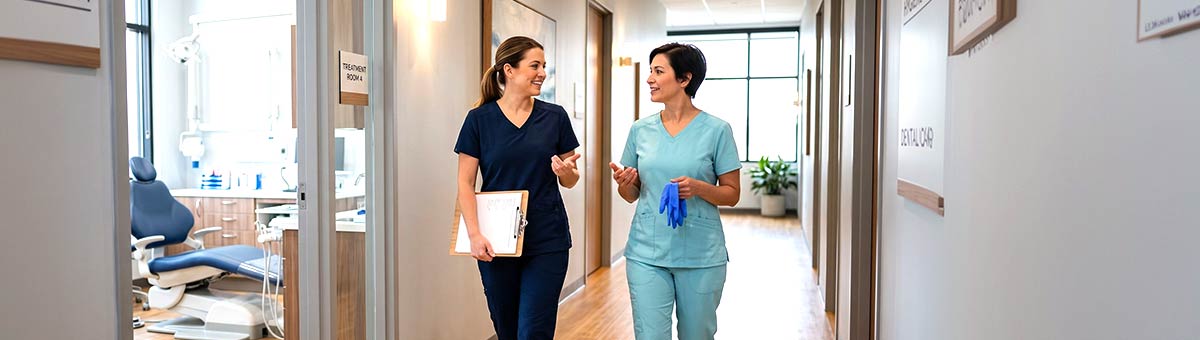
A patient leaves your practice after a well-executed procedure. The dentist explained the treatment, the appointment went as planned, and the clinical outcome looks good.
But when someone asks about the visit, the patient mentions how difficult it was to book. Or the paperwork they completed twice. Or the bill they didn’t understand.
The treatment matters most. It just isn’t the only thing patients remember.
The dental patient experience includes everything surrounding care: getting an appointment, feeling heard, understanding costs, and knowing what to do after leaving. For practice owners, improving those moments is an important part of looking after patients.
Patient Care and Patient Experience: What’s the Difference?
Patient care focuses on a person’s oral health: assessment, diagnosis, treatment, prevention, and clinical follow-up.
Patient experience describes how they encounter that care. Was it easy to reach the practice? Did someone listen to their concerns? Were their options explained clearly? Did they feel comfortable asking questions?
The two are closely connected.
Patient care includes… | Patient experience includes… |
Assessing oral health | Feeling listened to during the appointment |
Recommending appropriate treatment | Understanding the recommendation and available options |
Performing a procedure | Knowing what to expect and having concerns acknowledged |
Providing aftercare instructions | Being able to find those instructions and ask questions |
Planning follow-up care | Knowing when to return and how to book |
A friendly welcome cannot make up for poor clinical care. Equally, excellent treatment doesn’t erase a confusing or frustrating visit.
The opportunity is to make the whole experience reflect the quality of care your team provides.
How Is Dentistry Changing From the Patient’s Perspective?
Patients have more ways to interact with a practice than a phone call and an in-person visit. They can book online, receive reminders by text, complete forms at home, and pay through a link.
That creates more opportunities to make care convenient. It also raises a practical question: do those options work well together?
A patient who completes a form online expects the practice to have it. Someone who replies to a reminder expects their message to reach the team. A person who requests another appointment time needs to know whether the change is confirmed.
Convenience is only useful when patients can trust what happens next.
At the same time, preferences vary. Some patients welcome a booking link. Others want to speak to someone. A thoughtful practice makes room for both.
1. The Experience Begins Before the Patient Arrives
The first impression may happen while someone is searching your website during a lunch break.
Can they find your location? Is it clear how to book? Do they know whether the practice has received their request?
Start by making basic information easy to find. Keep booking instructions short, explain the next step, and provide a way to ask for help.
Adit’s appointment scheduling software gives patients another way to arrange a visit. Practices should configure it around supported appointment types and confirm how bookings connect with their existing schedule.
After booking, send the details patients need: the date, time, location, relevant preparation instructions, and a contact number.
A patient shouldn’t have to make another call just to find out where to park or what to bring.
2. Feeling Comfortable Starts With Feeling Heard
A patient may be anxious about discomfort, embarrassed about how long it has been since their last visit, or worried about the cost.
They may not volunteer any of that immediately.
A simple question can open the conversation:
“Is there anything you’d like us to know before we get started?”
Give them time to answer. Explain what will happen during the visit, check their understanding, and agree on how they can ask for a pause.
Comfort also means protecting dignity. Avoid comments that make patients feel judged about their oral health or attendance history. Discuss financial questions privately, and ask about any communication or accessibility needs.
These small choices help patients take part in their care rather than feeling that the appointment is happening around them.
3. Patients Need Explanations They Can Use
Clinical terms may be familiar to your team but mean very little to the person in the chair.
Explain what you found, why you recommend treatment, and what the available options involve. Use relevant images where helpful, and invite questions before moving on.
The American Dental Association recommends clear, everyday language and patient involvement in treatment decisions, including discussion of benefits, risks, and alternatives.
The conversation shouldn’t end with a printed estimate and “Call us when you’re ready.”
Give patients a clear summary and a way to ask follow-up questions. Adit’s Treatment Plan software feature supports sharing plans by text or email, presenting options, and organizing treatment into phases. That gives patients information to revisit after speaking with the dentist.
Better understanding supports an informed decision. It should never become pressure to proceed.
4. Less Paperwork Can Mean a Calmer Arrival
Arriving for an appointment and being handed several forms can feel like starting from scratch especially if the patient has already provided some of the information.
Review what you ask patients to complete. Which details are necessary? Which need updating? Which are already available to your team?
Send suitable forms before the appointment and make sure staff can find the completed submissions. Keep assistance available for patients who prefer or need another option.
Adit supports online patient forms and incomplete-form reminders, helping practices collect paperwork before the visit. The information that transfers into the patient record depends on the connected system and configuration.
The benefit isn’t simply using less paper. It’s giving patients a clearer, less rushed start to their appointment.
5. Communication Should Work Both Ways
A reminder tells the patient something. A conversation gives them a chance to respond.
Patients may need to change a time, ask about preparation, or clarify an instruction. If every response requires a call during working hours, a small question can turn into days of phone tag.
Adit brings calls, texting, and email into one communication platform. Two-way texting gives staff another way to handle routine patient questions without coordinating a live call.
Set realistic response expectations and make sure someone monitors incoming messages. Route clinical questions to the appropriate team member.
This is where technology can make a noticeable difference to the dental patient journey: patients have a convenient way to reach you, and staff have a consistent process for responding.
6. Costs Should Be Part of the Conversation
A patient can feel positive about treatment and still leave frustrated by an unexpected balance.
Explain estimates before care where possible. Make clear what insurance is expected to cover, what remains uncertain, and what the patient may need to pay.
If payment arrangements are available, explain their terms plainly. Avoid assuming that handing over an estimate means the patient understands it.
Once the amount is clear, make payment convenient. Adit Pay lets staff send requests by text or email so patients can pay online. Patients should also have a straightforward way to question a balance or speak with the practice.
An easy payment process works best alongside a clear explanation.
 Case Study
How Lifeworks Dental replaced 4 software systems with Adit and grew production 20% How much are you spending on dental software? Dr. Kini Tran, owner of Lifeworks Dental, ditched Weave, Dental Intelligence, Demandforce, and Smile Reminder and...
Download Case Study
7. The Visit Doesn’t End at Checkout
Patients may think of questions on the drive home that never occurred to them during the appointment.
Make sure they know where to find their aftercare instructions and how to contact the practice. Explain when they should return and whether the next visit is already scheduled.
Follow-up should reflect their actual needs. Someone who has booked shouldn’t keep receiving messages asking them to schedule. A patient awaiting a clinical answer needs more than a general reminder.
Adit supports configurable appointment and recall reminders. Accurate records and the right settings help those messages stay relevant to the patient’s next step.
Consistent follow-through helps the experience feel connected after the patient leaves.
How Is Technology Changing Dentistry?
Technology gives practices more ways to handle routine tasks and share information. For patient communication software, that can mean easier booking, earlier paperwork, useful reminders, and more convenient payments.
But adding software doesn’t automatically improve the experience.
A digital form that staff cannot locate still creates frustration. A text that nobody answers still leaves a patient waiting.
The useful question is: does this make something easier for the patient and the team?
Adit brings communication, forms, scheduling, reminders, payment tools, and other practice functions together. Your PMS and EHR remain central to clinical records and operations; supported connections help coordinate the work around them.
Choose the problem first, then the tool that helps solve it.
Start With What Patients Keep Asking
You don’t need a complete redesign to improve patient experience in dentistry.
Listen for repeated questions:
- “Did you receive my forms?”
- “Is my appointment confirmed?”
- “What does this estimate include?”
- “Who should I contact about this?”
- “When am I supposed to come back?”
Each question points to something that could be clearer.
Pick one issue, change the process, and ask patients and staff whether it helped. Over time, those improvements can make the practice easier to reach, easier to understand, and more comfortable to visit.
See Adit in Action. Book a personalized demo to explore how your practice can make everyday patient interactions simpler.
Frequently Asked Questions
1) What is the difference between patient care and patient experience in dentistry?
Patient care covers clinical assessment, treatment, prevention, and follow-up. Patient experience includes how someone books, communicates, understands their options, and feels throughout that care. Both matter to a well-run practice.
2) How are patient expectations changing in dentistry?
Digital services have made options such as online booking, texting, and electronic forms more familiar. Patients may value that convenience, but preferences differ. Clear explanations, respectful treatment, and access to a person remain important.
3) How can technology improve the dental patient experience?
It can simplify booking, reduce repeated paperwork, deliver reminders, and give patients convenient ways to ask questions or pay. The tools need accurate information, appropriate integration, and staff oversight to work well.
4) How can dentists make patients feel more comfortable?
Ask about concerns, listen without judgment, explain procedures in familiar language, and check understanding. Give patients a way to request a pause, respect privacy, and discuss costs clearly. Comfortable care starts with treating the patient as an active participant.
more about Adit?
Say goodbye to the hassle of using multiple tools. Adit centralizes your calls, texts, payments, reviews, and scheduling into one powerful dashboard. Simplify your operations and boost patient satisfaction today.
Schedule a Demo


Sushmita brings years of experience writing for the healthcare and dental technology space, with a focus on simplifying the challenges practices face every day. Her work blends industry insight, real-world examples, and clear messaging to help providers understand how the right tools can transform their business. She’s spent years working with healthcare brands, providers, and tech teams, helping them connect the dots between innovation and patient experience. And when she’s not writing for Adit, she’s building creative side projects and exploring new places.

Get a $25 Gift Card when you take a demo
Schedule a Demo
Get a $50 Gift Card
when you take a demo

Every missed call costs you!
3 quick questions. One eye-opening estimate.
Your estimate
if your average is higher.
The production that you missed in this year
$29,000 – $42,000production back?

*Offer valid Nov 1–30, 2026. Your account executive sends the $50 Amazon gift card after your demo. The additional $150 applies when you sign up for an annual plan paid upfront. Terms apply.
Looks like you're out of bounds!
Hey there! Your current location falls outside Adit's area of operation. If this is unexpected, try disabling your VPN and refresh your page. For further assistance or to book a live demo, connect with us at 832-225-8865.
November 14 Amazon Demo Promo
Terms and Conditions
Last Updated: November 14, 2026Offer ends November 17, 2026, and is limited to prospective customers who sign an annual agreement before November 30, 2026. Gift card will be emailed to the company owner or established representative within 4 weeks of signing the annual agreement. Offer may not be combined with any other offers and is limited to one (1) gift card per office. Offer is not available to current customers or to prospective customers or individuals that have participated in a Adit demo during the prior six (6) months. Recipient is responsible for all taxes and fees associated with receipt and/or use of the gift card as well as reporting the receipt of the gift card as required under applicable federal and state laws. Adit is not responsible for and will not replace the gift card if it is lost or damaged, is not used within any applicable timeframe, or is misused by the recipient. Adit is not responsible for any injury or damage to persons or property which may be caused, directly or indirectly, in whole or in part, from the recipient’s participation in the promotion or receipt or use of the gift card. Recipient agrees to indemnify, defend and hold harmless Adit from and against any and all claims, expenses, and liabilities (including reasonable attorney’s fees) arising out of or relating to a recipient’s participation in the promotion and/or recipient’s acceptance, use or misuse of the gift card. This offer is sponsored by Adit Communications, Inc. and is in no way sponsored, endorsed or administered by, or associated with Amazon.

Thank You!
We appreciate your interest! Adit AI will be calling you in the next few minutes!



Why Adit?
Cut your software bill by up to 60% when you merge everything your dental office needs to run under one roof.

Centralize Communications
- Phones & TeleMed
- Emails & eFax
- Texting & Reminders
- Call Tracking and more!

Streamline Operations
- Patient Forms
- Online Scheduling
- Payments
- Reviews and more!

Boost Production
- Performance Dashboards
- Morning Huddle
- Claims & Collections
- Patient Profiles
- Follow Up Lists
- Year Over Year Metrics

Acquire More Patients
- Digital Marketing
- Website Design
- SEO
- Google Ads
- Facebook Ads
 Front Desk free for life when you sign up!
+ $50 Amazon Gift Card
Sign up by filling out the form