



How to Reduce Patient Wait Times and Front-Desk Bottlenecks in a Dental Practice
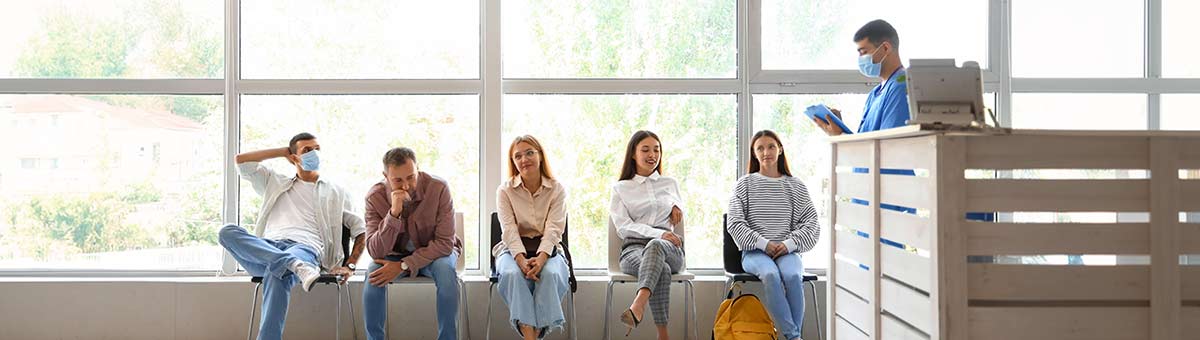
The 10 a.m. patient is here, but their forms aren’t finished. The phone rings while your front desk is checking their insurance details. Another patient is ready to pay and schedule a follow-up.
Meanwhile, the clinical team is waiting to find out who’s ready. Nobody is standing still. Yet the schedule is slipping.
This is a familiar dental office management challenge: several small delays meet at the front desk, and patients feel the result. Asking staff to work faster won’t solve a process that keeps interrupting them.
Reducing wait times starts with finding where the day slows down, moving some tasks ahead of the appointment, and making the handoffs clearer.
First, Find Out Where Patients Are Waiting
A crowded reception area doesn’t tell you what caused the delay.
One patient may be waiting to check in. Another has checked in but needs a form reviewed. A third is ready, but the treatment room isn’t available.
Those situations need different fixes.
For a short observation period, record a few timestamps:
Point in the visit | What it helps you understand |
Patient arrives | Whether they arrived before, at, or after their appointment time |
Check-in is complete | How long registration and administrative tasks take |
Patient enters the treatment room | Whether there’s a wait after check-in |
Provider begins care | Whether rooming and provider availability are aligned |
Checkout is complete | Whether payment and rebooking create another queue |
Keep the scheduled appointment time alongside these records. A patient who arrives 20 minutes early hasn’t necessarily experienced a 20-minute scheduling delay.
Use the findings to identify patterns, not to blame individual staff members. The goal is to understand where work gets held up.
1. Move Paperwork Before the Appointment
If a new patient starts a lengthy form at their appointment time, the visit may already be running behind before the clinical team sees them.
Send registration forms ahead of the visit, with a clear explanation of what needs to be completed. Give patients a contact number if they need help.
Your team should also review submissions in advance where practical. Collecting a form early only helps so much if nobody checks it until the patient arrives.
Adit supports digital forms and incomplete-form reminders. Its documentation also describes sending form requests through its patient communication software. These can help practices move some paperwork out of the check-in queue.
Keep an alternative available for patients who can’t complete forms online. Planning for that assistance is better than treating it as an unexpected interruption.
2. Prepare for the Visit Before the Patient Walks In
Take a look at tomorrow’s appointments while there’s still time to resolve questions.
Are any patient details missing? Does someone need clarification about an estimate? Is there an insurance question that requires a call? Does the clinical team need to review information before the visit?
Give each unresolved item an owner and a next step.
This doesn’t mean every issue will be settled in advance. It means your team knows what to expect and can tell the patient what is still being checked.
The patient should also know anything that affects arrival: where to park, which documents to bring, and whether they need additional time for registration.
A clear reminder can prevent several questions at the desk.
3. Stop Making Every Question a Phone Call
Phone calls interrupt work in a way that a message often doesn’t.
A staff member may be halfway through check-in when someone calls for directions. They return to the patient, then another caller asks about tomorrow’s appointment.
Two-way texting gives patients another way to handle routine questions. Your team can respond between in-person tasks, provided someone is responsible for monitoring the inbox.
Adit brings calls, texts, and email into one patient engagement platform. Its texting tools support conversations that don’t always need a live phone call.
Set a realistic response expectation. Moving questions into an inbox only helps if the messages get answered.
For calls that still come in during busy periods, decide who provides backup and how missed calls are assigned for follow-up.
4. Make Appointment Lengths Match the Work
Some waiting-room problems begin when the appointment is booked.
A new-patient visit, a routine follow-up, and a complex procedure don’t necessarily need the same time or resources. If the schedule doesn’t reflect those differences, the front desk has limited room to recover.
Review actual appointment durations with the clinical team. Look for patterns by procedure, provider, and time of day.
Ask:
- Are certain appointments regularly running over?
- Are multiple providers relying on the same room or equipment?
- Is enough time allowed for room turnover?
- How are urgent visits added?
- Are online booking rules consistent with the schedule your team can support?
Use those answers to adjust appointment templates. Protecting realistic time for care is part of improving dental office efficiency.
5. Make the Handoff From Front Desk to Clinical Team Obvious
“Has someone told the assistant this patient is ready?”
That question is a sign the handoff needs attention.
Agree on a simple way to distinguish patients who have arrived from those who are ready to be seen. If a patient is waiting on an administrative or clinical review, make that status clear to the appropriate staff.
Decide who updates the status and who responds to it. Use the practice system or an approved internal communication tool consistently.
A brief morning huddle can help everyone anticipate appointments that need extra coordination. Keep it focused on today’s schedule, known concerns, room availability, and coverage.
A better dental office workflow often comes from making the next action clear—not adding another task list.
 Case Study
How Lifeworks Dental replaced 4 software systems with Adit and grew production 20% How much are you spending on dental software? Dr. Kini Tran, owner of Lifeworks Dental, ditched Weave, Dental Intelligence, Demandforce, and Smile Reminder and...
Download Case Study6. Give Checkout as Much Attention as Check-In
The appointment may be finished, but the patient’s visit isn’t over.
Payment, estimates, follow-up scheduling, and questions can create a second line at the front desk. That line can then interfere with patients arriving for the next hour.
Have the clinical team communicate the next appointment requirements clearly before the patient reaches checkout. Staff should know the appointment type, timing, and any instructions that affect booking.
For eligible payment situations, an online payment request can give patients another way to settle a balance. Adit Pay supports requests sent by text or email. Confirm how completed payments are recorded and reconciled with your PMS.
Keep time available for patients who need a financial discussion. Convenience should make routine payments easier without rushing someone through questions.
7. Use Automation for Repeat Tasks
Dental front desk automation is most useful when it removes a predictable task from someone’s day.
Appointment reminders are a good example. Your team shouldn’t need to recreate the same reminder for every visit.
Adit lets practices configure reminders by timing, appointment status, and other filters. These require an integrated EHR and correctly mapped appointment statuses.
Before switching on automation, check what happens when an appointment changes. A canceled visit shouldn’t keep generating reminders, and a rescheduled patient needs the correct time.
Start with one task, test it, and then expand. Keep staff responsible for replies and exceptions.
Automation can reduce routine work. It won’t resolve an overbooked provider or an unavailable treatment room, so match the tool to the cause.
8. Tell Patients When the Schedule Is Running Behind
Even with a well-organized day, delays happen. A procedure may take longer than expected, or a patient may need urgent attention.
Don’t leave the waiting patient guessing.
Acknowledge the delay, share a realistic estimate when you have one, and update them if it changes. If the wait is substantial, discuss available options with the team.
Avoid promising “just five more minutes” unless that estimate is dependable. Protect other patients’ privacy when explaining the situation.
The dental patient experience includes how your practice handles an imperfect day. Clear communication gives patients a chance to plan around the delay.
What to Change First
You don’t need to rebuild the entire day at once.
Choose the most frequent source of waiting and make one targeted change:
If you notice… | Start here |
Patients filling out forms after their appointment time | Send forms earlier and review incomplete submissions |
Check-in repeatedly interrupted by calls | Set phone backup and offer monitored two-way texting |
Patients ready but nobody aware | Clarify the arrival-to-clinical handoff |
The same procedures regularly running over | Review appointment lengths with the clinical team |
A queue forming at checkout | Prepare rebooking details and review payment steps |
Staff making the same reminder calls daily | Test automated appointment reminders |
After the change, compare waiting times and staff feedback across similar days. Look at the longer waits as well as the average; a small group of patients may still be experiencing significant delays.
Give Your Front Desk More Room to Help Patients
Better dental office management means making the day easier to coordinate.
Adit can support that work through patient communication tools, digital forms, reminders, scheduling tools, and payment requests. The value comes from connecting those tools to the specific tasks slowing your practice down.
Your front desk can then spend more time helping the person in front of them, with fewer routine tasks competing for attention.
See Adit in Action. Book a personalized demo to explore how your practice can simplify check-in, communication, and follow-up.
Frequently Asked Questions
1) How can dental practices reduce patient wait times?
Identify where the wait occurs first. Then address the cause through earlier paperwork, pre-visit preparation, realistic appointment lengths, clear staff handoffs, and more organized checkout. Track the results to see whether the change helps.
2) How can technology reduce patient wait times in dental practices?
Digital forms can move paperwork before the visit. Reminders can share arrival instructions, and two-way texting can reduce some phone interruptions. Connected systems may also reduce duplicate entry. Technology works best when it supports a clear process and accurate information.
3) What are the most common causes of long wait times in dental practices?
Common sources include incomplete paperwork, unresolved administrative questions, appointments running longer than scheduled, urgent additions, room or staffing constraints, and unclear handoffs. Phone interruptions and checkout queues can also slow the front desk.
4) Why do dental patients have to wait so long?
The cause varies. Sometimes a previous patient needs more clinical attention than expected. In other cases, scheduling or administrative delays build throughout the day. Practices can reduce avoidable waiting by identifying these patterns and keeping patients informed when delays occur.
more about Adit?
Say goodbye to the hassle of using multiple tools. Adit centralizes your calls, texts, payments, reviews, and scheduling into one powerful dashboard. Simplify your operations and boost patient satisfaction today.
Schedule a Demo


Sushmita brings years of experience writing for the healthcare and dental technology space, with a focus on simplifying the challenges practices face every day. Her work blends industry insight, real-world examples, and clear messaging to help providers understand how the right tools can transform their business. She’s spent years working with healthcare brands, providers, and tech teams, helping them connect the dots between innovation and patient experience. And when she’s not writing for Adit, she’s building creative side projects and exploring new places.

Get a $25 Gift Card when you take a demo
Schedule a Demo
Get a $50 Gift Card
when you take a demo
Looks like you're out of bounds!
Hey there! Your current location falls outside Adit's area of operation. If this is unexpected, try disabling your VPN and refresh your page. For further assistance or to book a live demo, connect with us at 832-225-8865.
October 23 Amazon Demo Promo
Terms and Conditions
Last Updated: October 23, 2026Offer ends October 26, 2026, and is limited to prospective customers who sign an annual agreement before October 31, 2026. Gift card will be emailed to the company owner or established representative within 4 weeks of signing the annual agreement. Offer may not be combined with any other offers and is limited to one (1) gift card per office. Offer is not available to current customers or to prospective customers or individuals that have participated in a Adit demo during the prior six (6) months. Recipient is responsible for all taxes and fees associated with receipt and/or use of the gift card as well as reporting the receipt of the gift card as required under applicable federal and state laws. Adit is not responsible for and will not replace the gift card if it is lost or damaged, is not used within any applicable timeframe, or is misused by the recipient. Adit is not responsible for any injury or damage to persons or property which may be caused, directly or indirectly, in whole or in part, from the recipient’s participation in the promotion or receipt or use of the gift card. Recipient agrees to indemnify, defend and hold harmless Adit from and against any and all claims, expenses, and liabilities (including reasonable attorney’s fees) arising out of or relating to a recipient’s participation in the promotion and/or recipient’s acceptance, use or misuse of the gift card. This offer is sponsored by Adit Communications, Inc. and is in no way sponsored, endorsed or administered by, or associated with Amazon.

Thank You!
We appreciate your interest! Adit AI will be calling you in the next few minutes!



Why Adit?
Cut your software bill by up to 60% when you merge everything your dental office needs to run under one roof.

Centralize Communications
- Phones & TeleMed
- Emails & eFax
- Texting & Reminders
- Call Tracking and more!

Streamline Operations
- Patient Forms
- Online Scheduling
- Payments
- Reviews and more!

Boost Production
- Performance Dashboards
- Morning Huddle
- Claims & Collections
- Patient Profiles
- Follow Up Lists
- Year Over Year Metrics

Acquire More Patients
- Digital Marketing
- Website Design
- SEO
- Google Ads
- Facebook Ads
 Front Desk free for life when you sign up!
+ $50 Amazon Gift Card
Sign up by filling out the form